


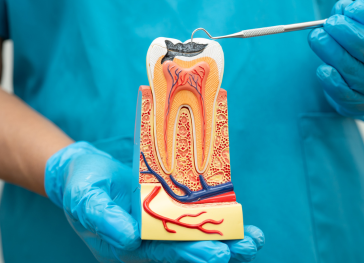

Root canals may have a negative reputation, but with today’s advanced technology and effective pain control, they are now a simple and comfortable procedure. Our root canal treatment removes bacteria from the infected canal, helps prevent future infection, and preserves your natural tooth. With our highly skilled team and a relaxing clinic environment, we ensure the experience is smooth and surprisingly comfortable.
When the pulp inside your tooth is exposed to bacteria and plaque—due to injury, trauma, or deep decay—it can become infected. This may cause intense pain and, if left untreated, can lead to a dental abscess that may spread and result in more serious health issues.
Root canal treatment removes the infection by clearing out the damaged nerves, blood vessels, and tissues inside the tooth, replacing them with a special dental filling material. This relieves pain, reduces sensitivity, prevents the infection from spreading, and helps preserve your natural tooth without the need for extraction.
The duration of treatment depends on the complexity of your tooth’s internal structure and its size, especially in larger teeth like molars. In some cases, the procedure can be completed in a single visit. If additional treatment is needed, your dentist will schedule a follow-up appointment before you leave and provide an estimated timeline during your first visit.
A root canal is required when the pulp inside the tooth is severely damaged or already dead, which is what causes pain and sensitivity. The procedure removes all infected and dead tissue, thoroughly cleaning and disinfecting the inside of the tooth.
After treatment, the tooth may feel slightly different since the nerves that sense temperature and pressure have been removed. However, the outer structure of the tooth remains intact and functional.
Choosing between a root canal and extraction depends on factors such as the level of damage, the tooth’s position, overall oral health, cost, and personal preference. If the tooth can be saved and the damage is manageable, a root canal is usually the preferred option. In more severe cases or due to financial considerations, extraction may be suggested. It’s best to consult your dentist for advice tailored to your specific situation.
Every case is different, so your dentist will guide you based on a detailed evaluation of your tooth’s condition and position. A crown is recommended only if it provides the best protection and support for your tooth.
In most cases, especially for back teeth, a crown is advised because root canal-treated teeth are weaker after the removal of the pulp. A crown helps strengthen the tooth and reduces the risk of fractures, particularly in areas that endure heavy chewing forces.
No, root canal treatment is a well-established and thoroughly researched procedure that has been safely performed for many years. It is an effective way to eliminate infection while preserving your natural tooth and avoiding extraction.
Generally, the appearance of your tooth will remain the same after treatment. The procedure focuses on removing infection and sealing the tooth internally while keeping its outer structure intact.
In some cases, the tooth may become more fragile, especially if a large portion is damaged. A crown may then be recommended to restore strength and maintain a natural look, as it is designed to match the color and shape of your existing teeth.
Root canal treatment is a proven and reliable procedure with a success rate of over 95%. In rare cases where healing does not occur as expected, further treatment such as a repeat root canal or a minor surgical procedure called an apicectomy may be required. Even then, the goal is usually to preserve the natural tooth and avoid extraction whenever possible.


 Aranthangi,
Pudukkottai - 614616.
Aranthangi,
Pudukkottai - 614616. 